Added to this site · 2026-09-16
Four Seas Standard Rules Explained: Scoring Patterns
AI-assisted draft translation. Terminology is under review; please refer to the Chinese original if anything is unclear.
Hand-building mahjong aims to encourage beautiful, large hands. Four Seas' highest edition should therefore include the most aesthetically compelling structures mahjong can produce, offering the fullest hand-building experience. To give such hands more chances and reduce small-hand racing, winning requirements should rise further. This demands stronger construction, attack, defense, and judgment of the overall situation, making the game more competitive. The Standard, or Advanced, Edition consequently offers the greatest breadth and difficulty in the series, pursuing the fullest expression of hand-building while exploring ideal competitive rules. The Standard rules are explained below in terms of patterns and winning requirements.
A hand-building game should include as many highly aesthetic patterns as possible. Some may argue that patterns above the normal limit are too rare to have value. Yet if a pattern is absent from the rules, nobody will deliberately build it. Nine Gates, Four Quads, and Big Four Winds occur extremely rarely even in competitive rules that include them. Their value is to show how beautiful a structure mahjong can offer, giving players something to aspire to and pursue. Four Seas Standard includes patterns meeting the highest aesthetic standards, such as the historical Japanese Seven Honor Pairs, also called Seven Stars Seven Pairs or Tianhepei. Seven pairs exactly matching the seven honor types represent the fullest combination of honor-tile and seven-pair beauty. Its difficulty may be second only to Four Identical Sequences, and major rulesets omit it. Standard includes it and takes measures to encourage such hands.
Four Seas Mahjong Standard Edition 3.1
| Class | Category | Subcategory | 5 | 10 | 20 | 30 | 40 | 60 | 80 | 120 | 160 | 240 | 320 | 480 |
|---|---|---|---|---|---|---|---|---|---|---|---|---|---|---|
| Suit | All Types | Mixed One-Suit | Pure One-Suit | Melded Nine Gates | All Honors | Nine Gates | ||||||||
| Pattern | basic | All Sequences | All Triplets | |||||||||||
| Seven Pairs | Seven Pairs | Seven Consecutive Pairs | Seven Honor Pairs | |||||||||||
| Seven Pairs | Seven Pairs with One Quad | Seven Pairs with Two Quads | Seven Pairs with Three Quads | |||||||||||
| special | All Unrelated | Seven All Unrelated | Five Honors and Knitted Straight | Thirteen Orphans | ||||||||||
| special | Honors and Plaid Tiles | |||||||||||||
| Number | terminal | All Simples | Mixed Outside Hand | Pure Outside Hand | All Terminals and Honors | All Terminals | ||||||||
| linked | Mixed Linked | All Linked | All Symmetric | |||||||||||
| oddeven | Mixed Odd | Mixed Even | All Odd | All Even | All Knitted | |||||||||
| consecutive | Mixed Consecutive | All Consecutive | ||||||||||||
| Quad | Quad | One Quad | Two Quads | Three Quads | Four Quads | |||||||||
| Honor | Dragon | Value Honor | Three-Dragon Pairs | Little Three Dragons | Big Three Dragons | |||||||||
| wind | Little Three Winds | Big Three Winds | Little Four Winds | Big Four Winds | ||||||||||
| wind | Three-Wind Pairs | Four-Wind Pairs | ||||||||||||
| One-Suit | identical Seq | Two Identical Sequences | Two Identical Sequences Twice | Three Identical Sequences | Four Identical Sequences | |||||||||
| shifted seq | Two Shifted Sequences | Three Shifted Sequences | Four Shifted Sequences | Silver Ladder | ||||||||||
| shifted seq | Two Shifted Sequences Twice | |||||||||||||
| straight | symmetric | Two Terminal Sequences | Pure Straight | Golden Bridge | Pure Terminal Sequences | |||||||||
| straight | consec seq | Half Straight | Half Straight Twice | Mirrored Half Straight | ||||||||||
| consec trip | consec trip | Little Three Consecutive Triplets | Three Consecutive Triplets | Two Consecutive Triplets Twice | Four Consecutive Triplets | Gold Ladder | ||||||||
| identical seq/trip | Tile Hog | Tile Hog Twice | Tile Hog + | Tile Hog ++ | ||||||||||
| consec seq/trip | consecutive T | Horizontal Cross | Horizontal H | Four Consecutive T | Jade Cube | Jade Disc | Big China | |||||||
| consec seq/trip | Consecutive T Twice | King Straight | ||||||||||||
| Three-Suit | identical seq/trip | identical Seq | Two Similar Sequences | Three Similar Sequences | ||||||||||
| identical seq/trip | identical trip | Two Similar Triplets | Little Three Similar Triplets | Three Similar Triplets | ||||||||||
| identical seq/trip | Mirrored | Mirrored Sequences | Mirrored Sequences and Triplets | Mirrored Triplets | ||||||||||
| consec seq/trip | consec seq | Assorted Straight | ||||||||||||
| consec seq/trip | consec trip | Assorted Three Consecutive Triplets | ||||||||||||
| chance | turn | Last Tile Draw | Blessing of Man | Blessing of Earth | Blessing of Heaven | |||||||||
| turn | Last Tile Claim | |||||||||||||
| Kong | Robbing a Kong | |||||||||||||
| Kong | Win by Kong Replacement |
| Winning level | Self-draw minimum | Discard-win minimum | Editions |
|---|---|---|---|
| I | 0 | 0 | A-I |
| II | 5 | 5 | A-II、B-II |
| III | 10 | 10 | B-III、C-III |
| IV | 10 | 20 | C-IV、D-IV |
| V | 20 | 50 | D-V |
A: Beginner; B: Basic; C: Intermediate; D: Standard. Payment threshold: 50 (25 for Basic); limit-hand threshold: 200.
| Outcome | Winner | Discarder | Each other opponent |
|---|---|---|---|
| Self-draw | +6H | — | All three pay 2H each |
| Discard win, H ≤ F | +4H | −2H | −H |
| Discard win, H > F | +4H | −(4H−2F) | −F |
H is the hand score and F the payment threshold (50 or 25).
1. Nine Gates
Nine Gates is unique in mahjong. A concealed hand of 1112345678999 in any one suit can win on any rank from one to nine in that suit. Its nine waits are exceeded only by the thirteen-sided Thirteen Orphans wait, which uses a special structure. Among basic winning structures, Nine Gates has the most possible winning tile types. Its extraordinary beauty earns particular attention across major rulesets, but its unusual winning logic repeatedly causes debate. The key is that Nine Gates requires not merely the completed arrangement, but first reaching the thirteen-tile concealed structure capable of winning on any tile of that suit. Chinese Official Mahjong uses this strict definition. Zung Jung does too, with a special clarification for its same-tile discard liability exemption. Riichi distinguishes pure Nine Gates from the less restrictive form usually called simply Nine Gates. The latter does not require reaching the thirteen-tile core before winning; the final tile may complete that core. This departs from the original idea and is sometimes called “pseudo Nine Gates.”
The strict definition is clear, but almost impossible to achieve in practice. The moderator duv4010484 of Baidu's International Mahjong forum has discussed this in detail.
Before drawing the exact Nine Gates structure, a player almost inevitably passes through a near-Nine-Gates hand: the core missing one tile Y, plus another tile X of the same suit. Receiving the exact core directly as a thirteen-tile hand should occur less than once in a million cases. Even if the player fortunately draws Y, completing the core, the traditional definition still disallows the win because the hand was not waiting on nine tile types. X must be discarded. Three possibilities follow:
a. Another player wins, or the wall is exhausted, before another tile of the suit arrives. The extraordinary hand is lost.
b. Another player immediately follows with an identical X, creating disputes over the same-turn passing rule and whether the discard carries liability.
c. A self-draw or discard completes Nine Gates. Congratulations—but the hand was already complete before X was discarded. Discarding and drawing again, possibly even the same X, seems unnecessary.
A solution discussed on the forum is to count a fully concealed self-drawn hand as Nine Gates whenever its fourteen tiles contain the core plus one extra tile, without requiring the extra tile to be the final winning draw. X need not be discarded. For a concealed discard win, however, the thirteen tiles must already form the core and offer nine waits. In other words, the thirteen core tiles must all have been drawn personally; the extra tile need not be the final winning tile.
The underlying structure 1112345678999 can theoretically wait on nine tile types, but an actual win still uses only one of them. After self-drawing the full core, why should the player not win using X already held, which was also personally drawn and could be any of the nine ranks? When every tile is concealed and self-drawn, this definition does not violate Nine Gates' original structural rationale. The central difficulty is obtaining the concealed, one-suit core at all.
For a discard win, the hand must already contain the core, or it does not satisfy this rationale. In practice, the revised definition leaves almost no possibility of a discard win on Nine Gates. As above, directly obtaining the core as thirteen tiles is almost impossible; drawing Y into the preceding near-Nine-Gates hand already completes a qualifying self-drawn win, before another player can deal in. Nine Gates thus becomes essentially a concealed self-drawn pattern, removing the discard-win concern.
Defining Nine Gates as obtaining the one-suit 1112345678999 core concealed, plus any extra tile of that suit, not necessarily the final winning tile, makes this perfect pattern more practical and slightly more achievable.
2. Melded Nine Gates
In Guangdong mahjong, this pattern is called Called Nine Gates, Open Nine Gates, or Jade Nine Gates. The Four Seas name, 九莲明灯, emphasizes its definition: obtaining the same one-suit 1112345678999 core non-concealed, plus any extra tile of the suit. At least one meld or the pair is completed through a chow, pung, or discard win on a pair wait. Melded Nine Gates is the lower pattern of Nine Gates and requires Pure One-Suit. As discussed in Designing Four Seas Intermediate, Part I: Scoring Patterns, offering only the most beautiful large pattern, without lower patterns sharing its justification, discourages players because of the difficulty. If a key tile becomes unavailable, a lower pattern also allows a change of plan. Rules should therefore supply lower forms of enormous patterns, and Melded Nine Gates is such an example. It includes the riichi Nine Gates case where the last tile completing the core comes from a discard rather than self-draw, but also permits earlier chows and pungs, so its scope is broader. Requiring both Pure One-Suit and the Nine Gates structure justifies a near-limit value in terms of construction and defensive difficulty. As Designing Four Seas Intermediate, Part I: Scoring Patterns explained, without lower patterns sharing the same rationale, the difficulty of the most beautiful hands can discourage players; lower patterns also provide recovery options when key tiles are blocked. Rules should therefore introduce lower patterns beneath enormous ones. Melded Nine Gates is an example: it includes both the riichi discard-completed core and previously called melds, and its one-suit Nine Gates structure justifies a near-limit score.
In terms of difficulty and restrictions:
Chinese Official Nine Gates = riichi pure Nine Gates > Four Seas Nine Gates > riichi Nine Gates > Four Seas Melded Nine Gates
3. Odd and even patterns
All Odd and All Even can combine with All Triplets or Seven Pairs, and can be viewed as higher patterns of those structures. All Even allows fewer combinations than All Terminals and Honors and is harder; All Odd is also difficult. They therefore offer few opportunities to increase the value of All Triplets or Seven Pairs. Intermediate-difficulty patterns are needed below All Odd and All Even. The combination-count and scoring table shows that Mixed Odd and Mixed Even fill this gap well, creating a family through which All Triplets can develop into larger hands.
| Pattern | Formula | Combinations | Scoring | Total |
|---|---|---|---|---|
| All Triplets | C(34,5) | 278,256 | 30 | 30 |
| Mixed Odd | C(22,5) | 26,334 | 30+20 | 50 |
| Mixed One-Suit + All Triplets | C(16,5)×3 | 13,104 | 30+30 | 60 |
| Mixed Even | C(19,5) | 11,628 | 30+30 | 60 |
| All Odd | C(15,5) | 3,003 | 30+60 | 90 |
| All Terminals and Honors | C(13,5) | 1,287 | 30+80 | 110 |
| All Even | C(12,5) | 792 | 30+80 | 110 |
| Pure One-Suit + All Triplets | C(9,5)×3 | 378 | 30+60 | 90 |
All Knitted requires every tile to belong to one of the rank groups 147, 258, or 369. It generalizes the traditional all-2/5/8-pung pattern. It necessarily combines with All Triplets or Seven Pairs and has a rationale similar to All Odd and All Even. An All Knitted hand can also consist entirely of odd or even tiles, such as only twos and eights. However, because the knitted and odd/even patterns share the same rationale and category, the no-reuse-within-a-category principle prevents adding them together. The higher-valued All Knitted should be selected.
4. Little Three Winds, Little Three Similar Triplets, and Little Three Consecutive Triplets
All three consist of two pungs and a pair. Zung Jung includes Little Three Similar Triplets and Little Three Winds; Four Seas also includes Little Three Consecutive Triplets. Some criticize these as insufficiently beautiful or difficult to merit inclusion. Yet they relate to their higher patterns just as Little Three Dragons relates to Big Three Dragons, or Little Four Winds to Big Four Winds. Are those lower patterns also unworthy? The issue concerns how hand-building is understood.
If only very difficult large patterns exist, they will rarely be completed. Easier patterns are needed within the same family. Big Four Winds came first, followed by Little Four Winds, and then the easier Big Three Winds and Little Three Winds. Although each step reduces beauty and difficulty, the wind-pung family appears much more frequently, and this also raises the opportunity for its most beautiful form, Big Four Winds. Hand-building needs not only the most beautiful large patterns but families progressing from small through intermediate to large patterns. A family expresses the construction process and creates opportunities to pursue it.
Three Similar Triplets at eighty points is a very large pattern. Its ten-point lower form, Two Similar Triplets, is qualitatively different, as the score gap indicates. Little Three Similar Triplets provides an intermediate step: after Two Similar Triplets, one further suitable tile can establish a ready hand for the little-three pattern, with the possibility of pursuing the full three-pung version if fortunate. Without that option, drawing one tile after completing two matching pungs and then waiting to make the third is almost impractical. Little Three Consecutive Triplets serves the same purpose.
Pattern selection is not a matter of maximizing or minimizing the count. It must follow the hand-building philosophy. Little Three Similar Triplets and Little Three Consecutive Triplets support construction in their families and should be included. Minor patterns such as Two Dragon Pungs and Two Wind Pungs make little difference and can be omitted for simplicity.
5. Seven-pair combinations
Standard introduces two limit patterns for seven-pair hands: Seven Consecutive Pairs and Seven Honor Pairs. They express the fullest beauty of seven consecutive pairs in one suit and a complete set of honor pairs. Just as Nine Gates needs Melded Nine Gates below it, Seven Honor Pairs gains Three Wind Pairs, Three Dragon Pairs, and Four Wind Pairs as lower forms. Building Seven Honor Pairs necessarily passes through these patterns, which offer both attacking opportunities and defensive fallbacks. They give seven-pair hands scope to grow. Similarly, the Expanded Edition introduces All Consecutive beneath Seven Consecutive Pairs: Seven Pairs plus All Consecutive uses seven consecutive ranks without requiring a single suit.
The seven-pair structure also gains the Seven Pairs + family, also called Dragon Seven Pairs or Luxurious Seven Pairs, in which four identical tiles form two pairs.
6. Mirrored Sequences, Mirrored Sequences and Triplets, and Mirrored Triplets
Mirrored Sequences originally means two pairs of rank-matching chows across two suits: two instances of Two Similar Sequences involving the same two suits. Its beauty comes from symmetry between two suits, so it can theoretically also include matching-rank pungs across those suits. This justifies introducing Mirrored Sequences and Triplets and Mirrored Triplets. The latter already includes the value of All Triplets. The mirrored family shares a category with Three Similar Sequences and Three Similar Triplets, so the no-reuse principle applies. For example:
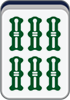
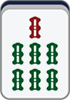







This hand scores Mirrored Sequences and Triplets plus All Simples, for sixty-five points. Little Three Similar Triplets must not be added.
7. Silver Ladder and Golden Ladder
These are higher patterns of Four Shifted Sequences and Four Consecutive Triplets. Adding a same-suit pair at an adjacent rank completes the most beautiful full-flush forms of those patterns; Golden Ladder is also called Little Five Consecutive Triplets. Although the four-meld patterns already reach the limit, Standard includes these traditional ladders in pursuit of the most beautiful possible structures.
8. Other patterns
Four Identical Sequences is the most difficult mahjong pattern, without equal. Pure Terminal Sequences is the fullest expression of symmetry: one suit, symmetric ranks from one to nine, and a symmetric arrangement of the tiles themselves.
All Terminals and All Honors can each combine with All Triplets or Seven Pairs. All Terminals combined with All Triplets necessarily also forms Three Similar Triplets or Mirrored Triplets. Big and Little Four Winds can combine with Mixed One-Suit or All Honors.
Standard defines a pattern-based limit: when any individual pattern exceeds two hundred points, its value determines the score of the entire hand. This concerns score calculation. When identifying the hand's patterns, all qualifying patterns must still be recorded, rather than stopping after finding one limit pattern.
For example:

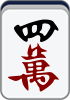
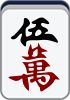




All Symmetric + Two Identical Sequences Twice + Mirrored Sequences + All Simples = 80 + 80 + 40 + 5 = 205. Since this exceeds the ordinary limit, the hand scores two hundred.
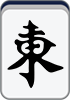
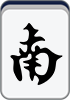
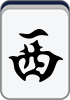
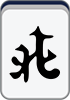
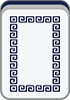
All Honors, Little Four Winds, All Triplets, and Value Honor twice, with East as the seat wind: the hand scores 240, from All Honors or Little Four Winds.


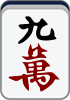

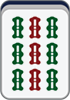
All Terminals and Mirrored Triplets: the hand scores 320, from All Terminals.
Originally published in Chinese on Zhihu · Zhihu revision 2026-05-31